

Digital Twin and ERP: Next-Gen Operational Intelligence for Oil & Gas
Digital twins meet ERP: From concept to operational reality
Digital twins—a virtual replica of physical assets updated in real time with sensor data—have moved from futuristic concept to practical tool in oil and gas, particularly for asset management, predictive maintenance, and operational optimization. In Africa’s downstream sector, where infrastructure challenges, regulatory demands, and volatile supply chains create constant pressure, digital twins promise to simulate scenarios, reduce downtime, and extend asset life.
ERP systems like ROCKEYE, built specifically for downstream oil and gas, provide the data backbone and analytical engine that make digital twins actionable. ROCKEYE’s real-time data integration, AI-powered insights, and modules for terminal management, inventory, logistics, and stations create the foundation for twin-like intelligence without needing separate platforms.
1. What digital twins bring to downstream operations
In terminals, depots, and stations, digital twins allow operators to create virtual models of tank farms, loading gantries, pipelines, and forecourts that mirror physical reality. These models ingest live data from IoT sensors (tank levels, pressures, temperatures, flow rates) and update continuously, enabling simulation of “what if” scenarios like vessel delays or blending adjustments.
For African operators, twins address specific pain points: simulating depot replenishment during port congestion, predicting station stockouts based on traffic patterns, or modeling terminal throughput under regulatory changes. By reducing unplanned downtime 30-50% and optimizing maintenance, twins directly cut OPEX in environments where field access is difficult and parts take weeks to arrive.
2. ERP as the data and decision engine for twins
Standalone digital twins are powerful but data-hungry; they need clean, unified streams from operations, finance, and logistics. ROCKEYE ERP fills this gap with its real-time data insights, built-in intelligence, and deep analytical capabilities across TAS terminals, inventory management, smart logistics, and smart stations.
ROCKEYE’s terminal management uses AI to optimize scheduling and throughput, effectively creating a “soft twin” of jetty and tank operations by monitoring real-time operational decision-making and cutting downtime 30-50%. Inventory management provides 360-degree visibility into stock movements, ownership, and batch data, while smart vehicle tracking delivers GPS, telematics, and route analytics—feeding twins with the operational heartbeat. The ERP’s native RPA and AI automate data cleansing and integration, ensuring twins reflect accurate, current reality rather than siloed snapshots.
3. Real-time simulation and predictive intelligence
The magic happens when ERP data powers twin simulations. ROCKEYE’s real-time reporting and analytics let operators test scenarios like “What if refinery output drops 20%?” or “How does rerouting trucks affect depot stocks?” without risking live operations.
In practice, this means terminal planners use TAS data in a virtual model to pre-sequence vessels and blends, avoiding demurrage. Depot managers simulate replenishment waves based on station IoT and vehicle ETAs, balancing stock across urban and rural sites. Station operators get predictive alerts on pump performance or low stock before customers notice. ROCKEYE’s emphasis on process automation and deep insights turns these simulations into automated decisions, like auto-dispatching trucks or adjusting blends.
4. Africa-specific advantages: Handling connectivity and scale
Africa’s operational realities—intermittent networks, remote sites, multi-country regs—make digital twins challenging but ERP makes them feasible. ROCKEYE supports offline data capture at stations and vehicles, syncing when connectivity returns, ensuring twins stay current even in low-coverage areas.
Its cloud architecture scales across 10-1000 stations without infrastructure upgrades, while multi-currency and regulatory templates handle Nigeria’s NMDPRA, Kenya’s EPRA, and others seamlessly. For operators like those in Nigeria, where digital twins could transform asset management amid infrastructure gaps, ROCKEYE’s ERP provides the compliant, accessible data layer needed to make twins practical at scale.
5. Case for integration: Twins + ERP = operational superintelligence
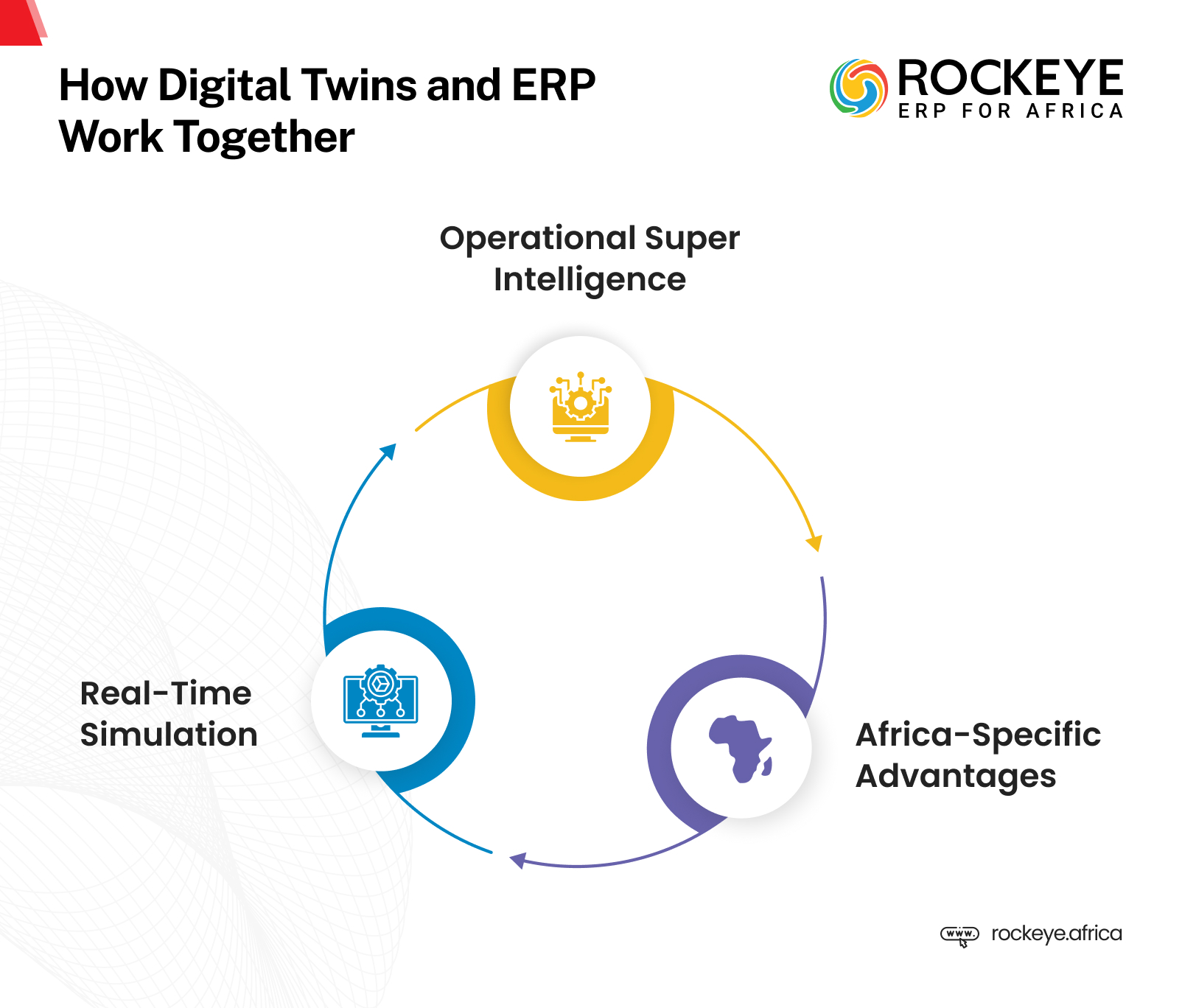
While pure digital twin platforms exist, pairing them with cloud ERP for oil and gas like ROCKEYE unlocks next-gen intelligence: ERP feeds twins with operational data (liftings, sales, routes), twins simulate optimizations, and ERP executes via automation (RPA scheduling, AI dispatching).
ROCKEYE’s oil and gas downstream suite already delivers twin-like capabilities—real-time tank twins via IoT, virtual route optimization, predictive station replenishment—without custom development. Future convergence could see full 3D twins of terminals integrated directly into the ERP dashboard, but current ROCKEYE analytics already provide the predictive edge downstream needs.
The downstream future: Twins as ERP’s killer app
Digital twins represent operational intelligence at its peak: virtual assets that predict, prescribe, and prevent issues before they cost money. For African oil and gas, where margins are thin and reliability is everything, ERP like ROCKEYE provides the real-time data, AI smarts, and automation to make twins viable today—not tomorrow.
Operators starting with ROCKEYE’s oil and gas TAS and oil gas logistics system modules are already running “twinned” operations that cut downtime, optimize flows, and boost throughput. As IoT matures and cloud scales, full digital twins will become standard—but the ERP foundation determines who wins.