


Optimizing Inventory & Logistics Using ERP Solutions in Africa
Why inventory and logistics are make-or-break in African downstream
If you run terminals, depots, or retail fuel stations in Africa, you already know the reality: volatile supply, long and unpredictable routes, multi-country regulations, and infrastructure that does not always cooperate. The result is a constant balancing act between stockouts (lost sales and angry customers) and overstock (locked working capital and higher risk of losses), while logistics costs quietly eat into already thin margins.
Optimizing inventory and logistics is no longer about better spreadsheets—it is about having a connected, real-time view of product, trucks, and orders across every node in your network. That is exactly what ROCKEYE’s integrated ERP, with dedicated Inventory Management, Smart Logistics, and Smart Vehicle Tracking solutions, is designed to do for downstream oil and gas in Africa.
1. Gaining real-time visibility across all locations
One of the biggest challenges for African downstream players is fragmented data. Terminals, depots, and stations often run on separate tools, and some locations still rely on manual books or basic POS exports. That makes it hard to answer simple but critical questions like: “What is my stock position by product, by location, right now?” or “Which depots are at risk of running dry in the next 48 hours?”
ROCKEYE’s Inventory Management solution provides a centralized, real-time view of packaged and non-liquid inventory such as lubricants across warehouses, depots, and related logistics movements. It manages receiving, quality inspection, storage, and outbound dispatch while ensuring real-time visibility for planners and finance teams.
For liquid petroleum products (white products), inventory visibility is handled separately by the Fluid Inventory (iFluid) module, which manages tank stock, movements, and reconciliation across terminals and depots. Together with Smart Logistics and Vehicle Tracking data, this ensures visibility of both stored and in-transit inventory across the downstream supply chain.
2. Balancing stock levels to reduce both shortages and excess
In many African markets, it is common to see some depots and stations sitting on excess inventory “just in case,” while others regularly face stockouts due to supply disruptions or delayed trucks. This leads to higher carrying costs, increased wastage, and lost sales that could have been avoided with better planning.
ROCKEYE’s inventory ecosystem helps downstream companies balance cost, service levels, and operational efficiency through real-time inventory visibility. Fluid Inventory (iFluid) manages liquid stock at the terminal level, ensuring accurate tank inventory tracking, movement visibility, and reconciliation, while Smart Station manages stock visibility and replenishment at the retail station level. Together with built-in intelligence and analytics, this enables better demand forecasting, optimized stock levels, and reduced operational losses across the downstream network.
3. Turning logistics into a coordinated, data-driven operation
Logistics in downstream oil and gas is often one of the largest cost lines—and one of the most variable. Unoptimized routing, poor trip planning, and manual freight disbursement processes can quickly add up, especially when dealing with a mix of in-house and third party transporters across long, challenging routes.
ROCKEYE’s oil gas Logistics system provides a centralized platform to manage freight movements, truck parks, freight disbursement, and related financial processes. It streamlines order processing from placement to fulfillment, optimizes routes using advanced algorithms, and provides real-time tracking for each shipment so businesses can stay informed about the status of their loads at all times. Integrated billing, invoicing, and payment tools then simplify financial reconciliation and reduce disputes, tying logistics execution directly to finance and reporting.
By combining Smart Logistics with fleet and trip data from Smart Vehicle Tracking, downstream operators can identify bottlenecks in their supply chain, reduce lead times, and improve on-time delivery performance without adding more trucks or drivers.
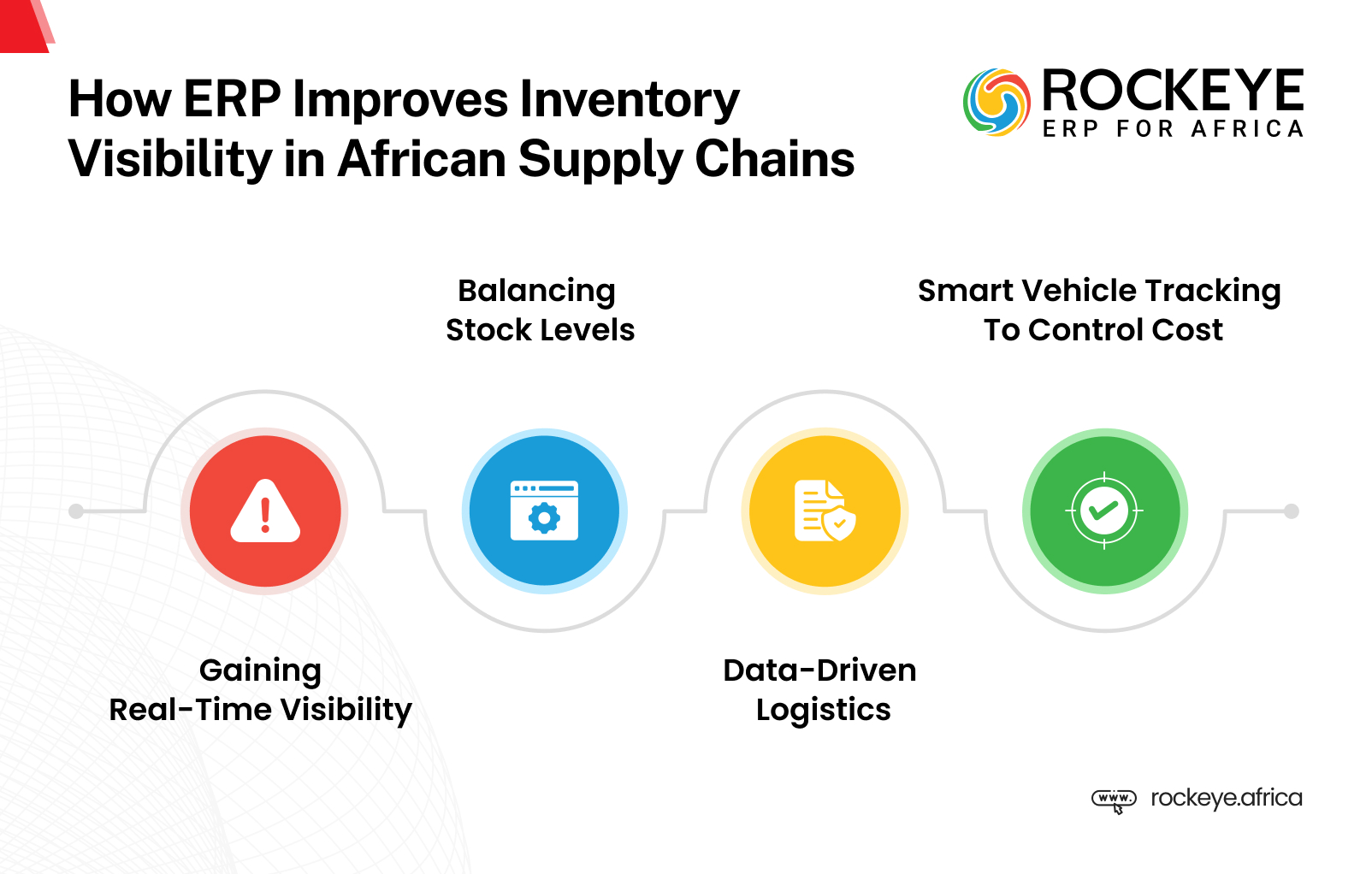
4. Using Smart Vehicle Tracking to control cost and performance on the road
Even with good planning, everything can still fall apart if you cannot see where your trucks are, how they are being driven, and whether they are following agreed routes and schedules. In Africa, where long distance routes, security concerns, and variable road conditions are the norm, this visibility is non negotiable.
ROCKEYE’s Smart Vehicle Tracking solution uses advanced GPS/GPRS technology to provide real time location data, vehicle diagnostics, driving behavior, and complete trip histories for each vehicle in your fleet. It offers route optimization, trip scheduling, smart alerts for unplanned stoppages or overspeeding, and geofencing to ensure trucks enter and exit only approved regions. The system also supports offline data tracking, storing trip data when network coverage is weak and synchronizing it once connectivity is restored—an important capability for many African corridors.
The impact on logistics performance and costs is measurable: ROCKEYE reports improvements such as up to 30% lower accident risk, around 15% reduction in fuel expense, approximately 20% higher productivity, and effectivabout 28% overall operational cost savings when its fleet tracking solution is implemented ely. These gains come from better route choices, proactive handling of risky driving behavior, reduced idle time, and more accurate trip planning and settlement.
5. Connecting inventory and logistics for end to end optimization
True optimization only happens when inventory and logistics systems talk to each other. Having an accurate stock position is helpful, and having a strong logistics tool is helpful—but the real step change comes when they are integrated on a single ERP.
ROCKEYE’s downstream suite is designed with this integration in mind. Inventory Management not only tracks stock levels and movements, but also includes fleet management hooks and real time reporting to link inventory flows directly with logistics operations. Smart Logistics, in turn, uses inventory and order data to drive automated order processing, route optimization, freight disbursement, and performance analytics. Vehicle Tracking feeds into both modules, so dispatchers and warehouse teams always know which loads are on the way, which have arrived, and where delays are likely to occur.
Because everything runs on the same ERP backbone, finance sees a single source of truth: inventory valuations, logistics costs, and freight payouts are all tied back to verifiable operational data, improving financial transparency and control.
6. Adapting to African realities: connectivity, scale, and complexity
Any solution that claims to optimize inventory and logistics in Africa must be realistic about the environment: patchy connectivity, long cross border routes, mixed cash and digital payments, and regulations that differ by country and often evolve.
ROCKEYE’s platform is built with these realities in mind. It supports offline tracking for vehicles, web and mobile based access for warehouse and logistics operations, and centralized data models that handle multi location and multi currency operations. Native automation (RPA) and smart integrations with hardware like IoT devices, POS systems, and other systems make it possible to plug ROCKEYE into existing infrastructure while gradually phasing out manual processes.
For downstream operators scaling from a few depots and fleets to large, multi country networks, this allows them to standardize processes, maintain consistent inventory and logistics practices, and still respond quickly to local conditions and regulatory demands.
From firefighting to control: what “optimized” really looks like
When inventory and logistics are optimized with a downstream specific ERP like ROCKEYE, day to day operations look very different:
- Depot managers work from real-time dashboards instead of chasing updates via phone.
- Planners see consolidated stock and in transit quantities before raising any new orders.
- Dispatchers allocate trucks based on system suggested optimal routes and capacity.
- Finance teams close books faster because every movement, cost, and invoice is linked and traceable.
Most importantly, leaders gain confidence that they are running a lean supply chain without compromising availability or service in an inherently volatile market. With ROCKEYE’s Inventory Management, Smart Logistics, and Smart Vehicle Tracking working together as part of a broader ERP, downstream operators in Africa can turn inventory and logistics from chronic problems into competitive advantages.